
Famous architects of the French Riviera: villas by Barry Dierks, Le Corbusier, Oscar Niemeyer, John Pawson and more
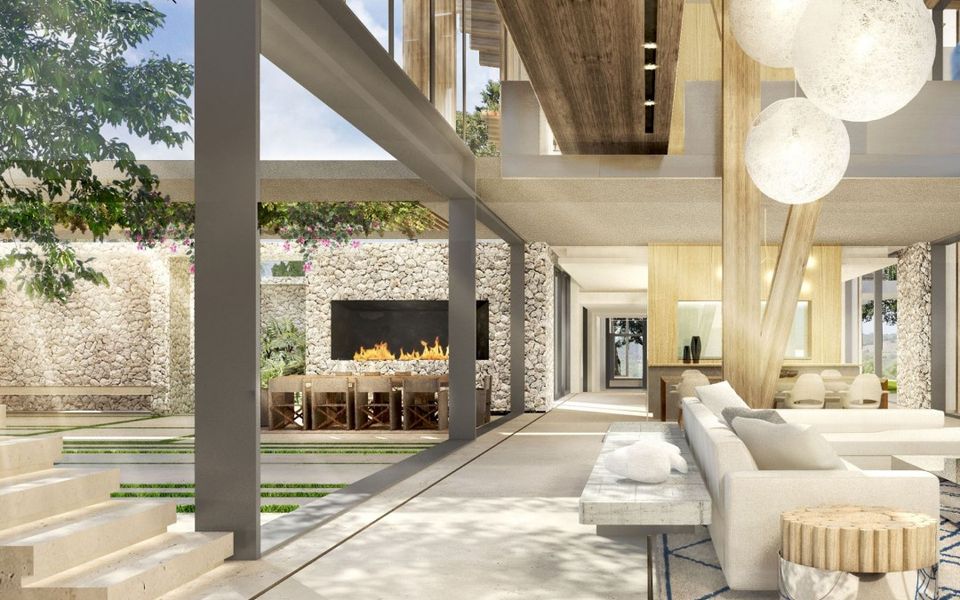
With its coastline, light and landscapes, the French Riviera has long attracted some of the world's most renowned architects. From the Modernist villas of the 1920s and 1930s to the contemporary homes of today, they have left a remarkable architectural heritage along the coast, from Saint-Tropez to Roquebrune-Cap-Martin.
This article looks at the architects who have shaped the Riviera, and the villas they designed.
Barry Dierks: the American architect of the Riviera's golden age
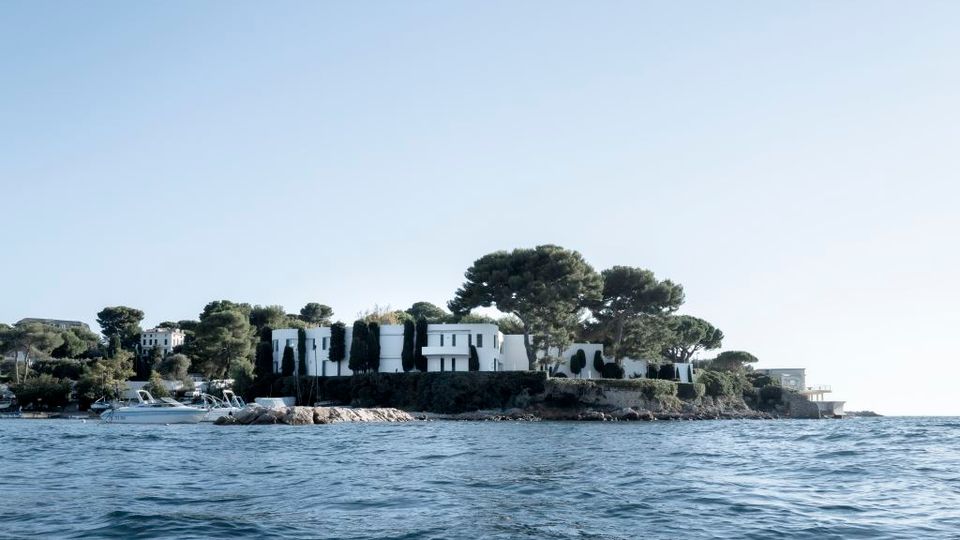
Barry Dierks was born in Pittsburgh and graduated from the École des Beaux-Arts in Paris. He designed many villas on the Riviera in the 1920s and 1930s. His guests and clients included some of the best-known figures of the time, and Winston Churchill, Noël Coward and Marilyn Monroe are among those said to have stayed in his villas.
Unlike his contemporaries Eileen Gray and Robert Mallet-Stevens, who designed the Villa Noailles in Hyères, Dierks did not follow the strict Modernist style of the period. He developed his own approach, combining American practicality with European romanticism.
In 1925, he built his own house, Le Trident, on the Pointe de l'Esquillon in Théoule-sur-Mer, where he lived with his partner, Colonel Eric Sawyer. Over his career, he worked for clients from Somerset Maugham, whose Villa La Mauresque on Cap Ferrat he remodelled, to Prince Louis II of Monaco.
The Château de l'Horizon, Golfe-Juan
One of Dierks' best-known works is the Château de l'Horizon, completed in 1932 for the American actress Maxine Elliott. It was built on a narrow strip of land between the railway line and the rocky shore at Golfe-Juan, in Vallauris. The work took two years and included blasting the rocks to create a flat surface for a swimming pool, with a slide running down to the sea.
Maxine Elliott entertained often at her three-storey villa. Winston Churchill was a regular guest between 1934 and 1940. Prince Aly Khan bought the villa in 1948, and his wedding to Rita Hayworth was celebrated there the following year.
Other white villas by Dierks still stand along the coast, among them the Villa Aujourd'hui on Cap d'Antibes, once owned by the film producer Jack Warner.
Le Corbusier and Eileen Gray at Roquebrune-Cap-Martin
The Swiss-born architect Charles-Édouard Jeanneret, known as Le Corbusier, is one of the founding figures of modern architecture. He first came to Cap Martin in the 1930s and spent most of his summer holidays there.
In 1952, he built his Cabanon, a small wooden holiday cabin of around 15 m², facing the sea on the rocky slopes of Roquebrune-Cap-Martin. Despite its size, it has a carefully designed layout based on his Modulor system of proportions. He called it his château. Le Corbusier also designed the neighbouring Unités de camping, and died while swimming off Cap Martin in 1965.
The Cabanon stands next to the Villa E-1027, designed by Eileen Gray with Jean Badovici. Together with the Étoile de Mer bar-restaurant, they form the Cap Moderne site, now owned by the Conservatoire du littoral. In 2016, the Cabanon was inscribed on the UNESCO World Heritage List, along with 16 other works by Le Corbusier. Guided visits of the site are available by reservation.
Oscar Niemeyer and the Villa Brasilia, Saint-Jean-Cap-Ferrat
The Brazilian architect Oscar Niemeyer, one of the key figures of modern architecture, is best known for the civic buildings of Brasília. In 1965, he left Brazil in opposition to the military regime, and settled in France in 1967.
That same year, he was commissioned by the Italian publisher Giorgio Mondadori to design a villa on the Pointe du Colombier, in the Saint-Hospice area of Saint-Jean-Cap-Ferrat, one of the most exclusive peninsulas in the world. The Villa Brasilia, also known as the Villa Nara Mondadori, was completed in 1968.
The villa recalls the Casa das Canoas, which Niemeyer built in Rio de Janeiro in 1953. True to his style, it is made of abstract forms and flowing curves. Niemeyer famously preferred curves, inspired by the mountains, rivers and waves of his country, to hard straight lines. The interiors were later redesigned by the American architect Peter Marino.
John Pawson in Les Parcs de Saint-Tropez
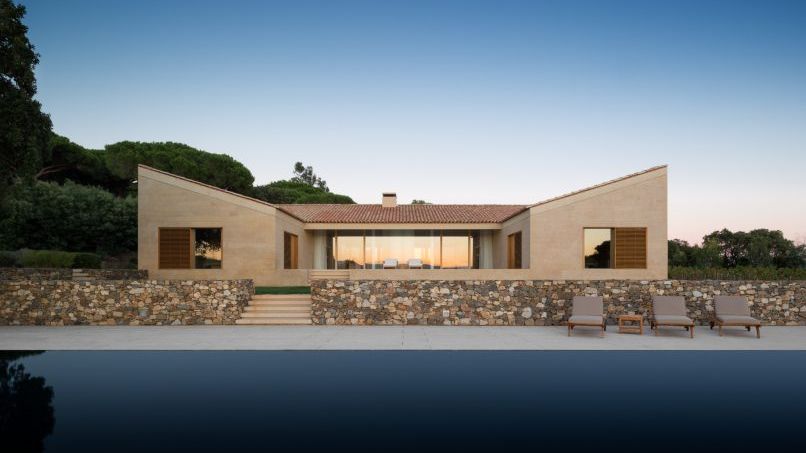
John Pawson is a contemporary British architect and designer whose work focuses on space, proportion, light and materials. He designed a large, ultra-minimalist property in the private residential domaine of Les Parcs de Saint-Tropez.
Pierre Yovanovitch in Saint-Tropez
The interior architect Pierre Yovanovitch grew up in Nice and spent many summers in Saint-Tropez. Now based in Paris, he designed a house on the Route des Salins for one of his childhood friends, which has featured in AD France and Madame Figaro.
Yovanovitch is known for his mastery of volume and space. He favours noble materials such as precious woods, stone, marble and metal, and adapts each interior to its setting and to the lifestyle of the client. Art is central to his approach, and he often combines contemporary pieces with vintage design, particularly Scandinavian and American design from the 1930s to the 1960s. His furniture designs are available through The Invisible Collection.
Peter Marino on the Côte d'Azur
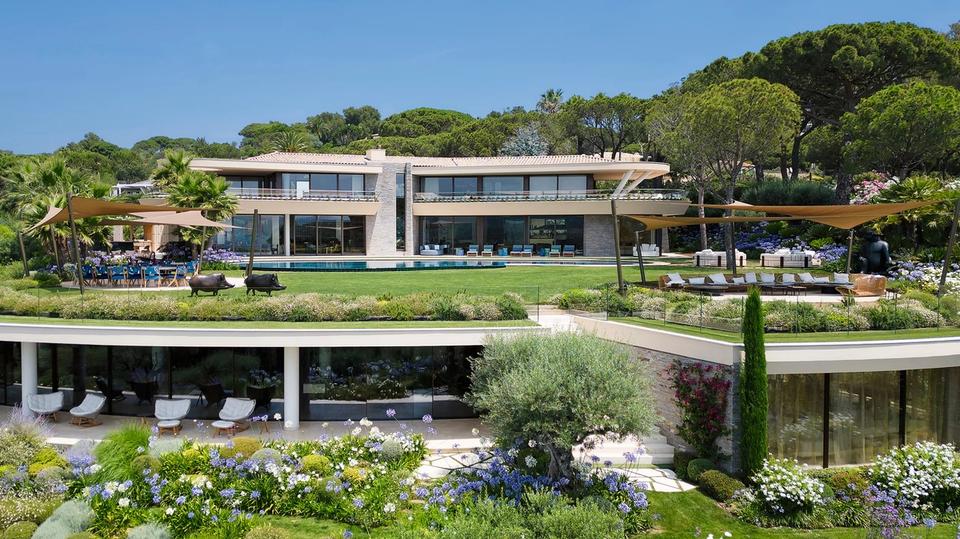
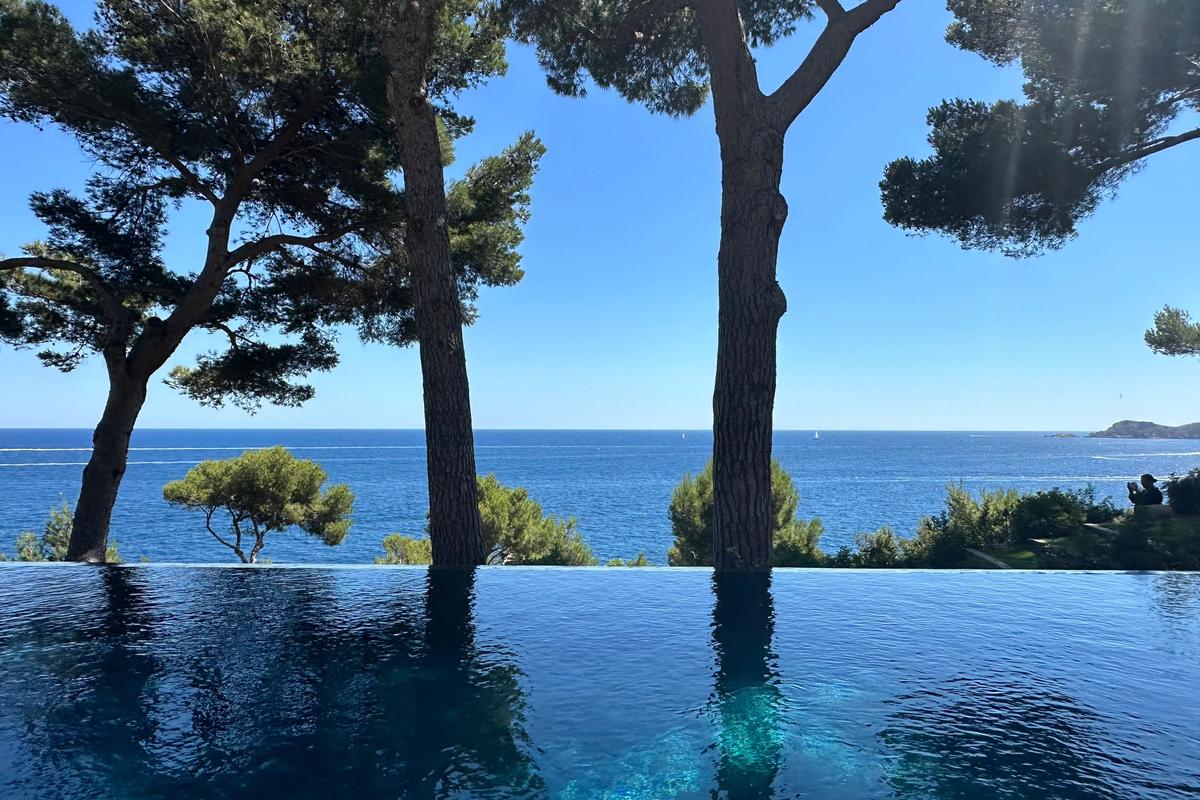
The American architect and interior designer Peter Marino is known for combining art, luxury and modernism. In the South of France, he has worked on private villas, luxury boutiques and residences, blending contemporary design with Mediterranean elegance. His projects in the region include a property completed in Saint-Tropez in 2023, and the redesign of the interiors of Niemeyer's Villa Brasilia on Cap Ferrat.
Stefan Antoni and SAOTA: Villa Le Pine, Saint-Tropez & Villefranche sur Mer
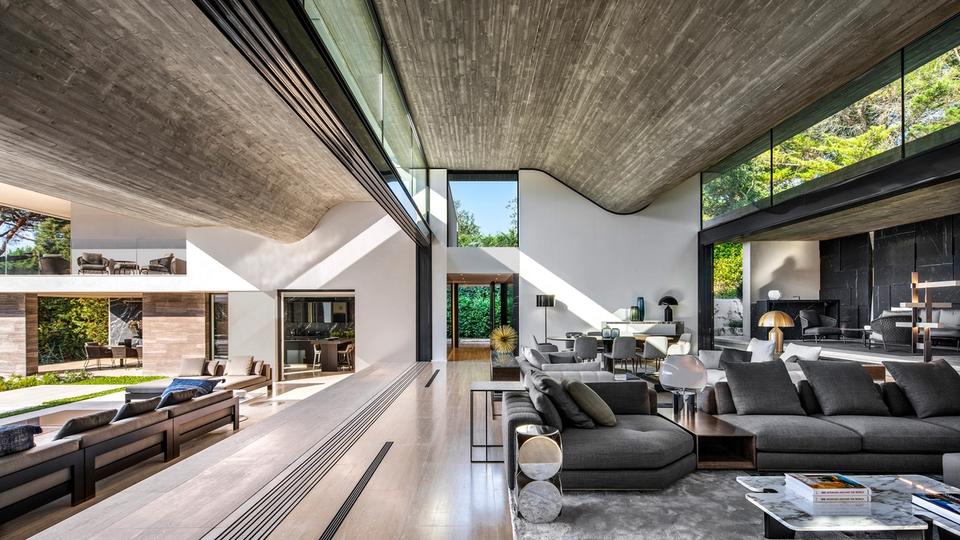
Stefan Antoni is a director of the leading South African architecture firm SAOTA, known for contemporary designs with clean lines, open spaces and a close connection between indoor and outdoor living.
In Saint-Tropez, SAOTA designed Villa Le Pine, a summer residence for a family, on a large plot bordered to the south by a clearing of pine trees. The house is set at the back of the plot and steps down with the natural contours of the land. The pine forest became the starting point of the design.
Inside, the main living and dining area has an undulating ceiling of exposed timber planks that extends outside. It refers to the surrounding pines and the coastal setting, and its curves contrast with the straight lines of the house. The villa offers a contemporary interpretation of traditional Mediterranean Riviera architecture.
On the Côte d'Azur, SAOTA, working with its then associate Amé Venter, also transformed an existing villa perched above a bay into a holiday home set over seven terraced levels, with five bedrooms, two guest houses, an infinity lap pool and a padel court on the cliffside.
Norman Foster: La Voile on Cap Ferrat and the Yacht Club de Monaco
Norman Foster is one of the most influential British architects, and the founder of Foster + Partners. His best-known buildings include the Reichstag dome in Berlin, 30 St Mary Axe in London and Apple Park in California. He has also left his mark on the Côte d'Azur.
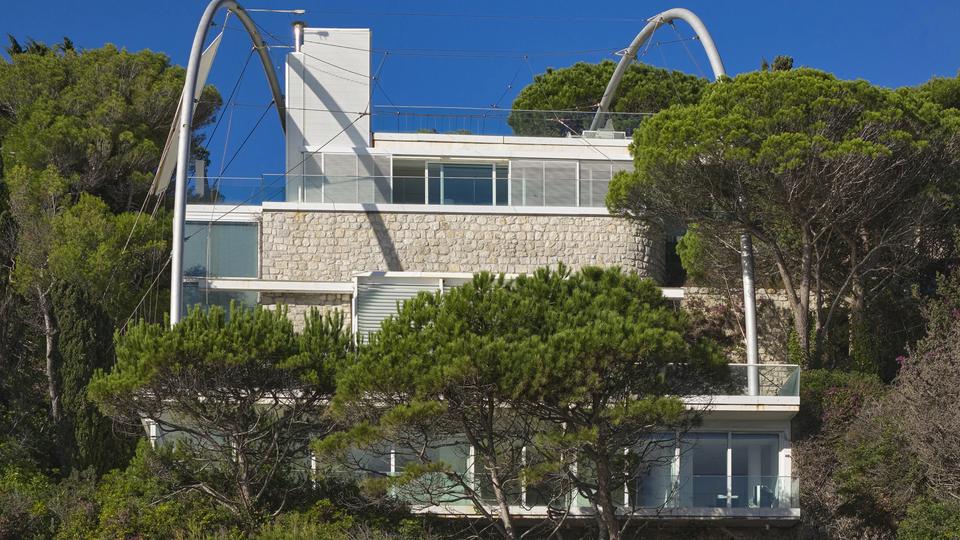
On Saint-Jean-Cap-Ferrat, Foster designed La Voile, a waterfront villa on seven levels built between 1999 and 2002. It was his family's own Riviera retreat for several years. Local planning rules did not allow the original 1950s house to be demolished, so Foster transformed it within its existing framework. The result is a white steel and glass villa, arranged upside down to make the most of the sea views, with a retractable, sail-like canopy that gives the house its name. It also features a large mud fresco by the British artist Richard Long.
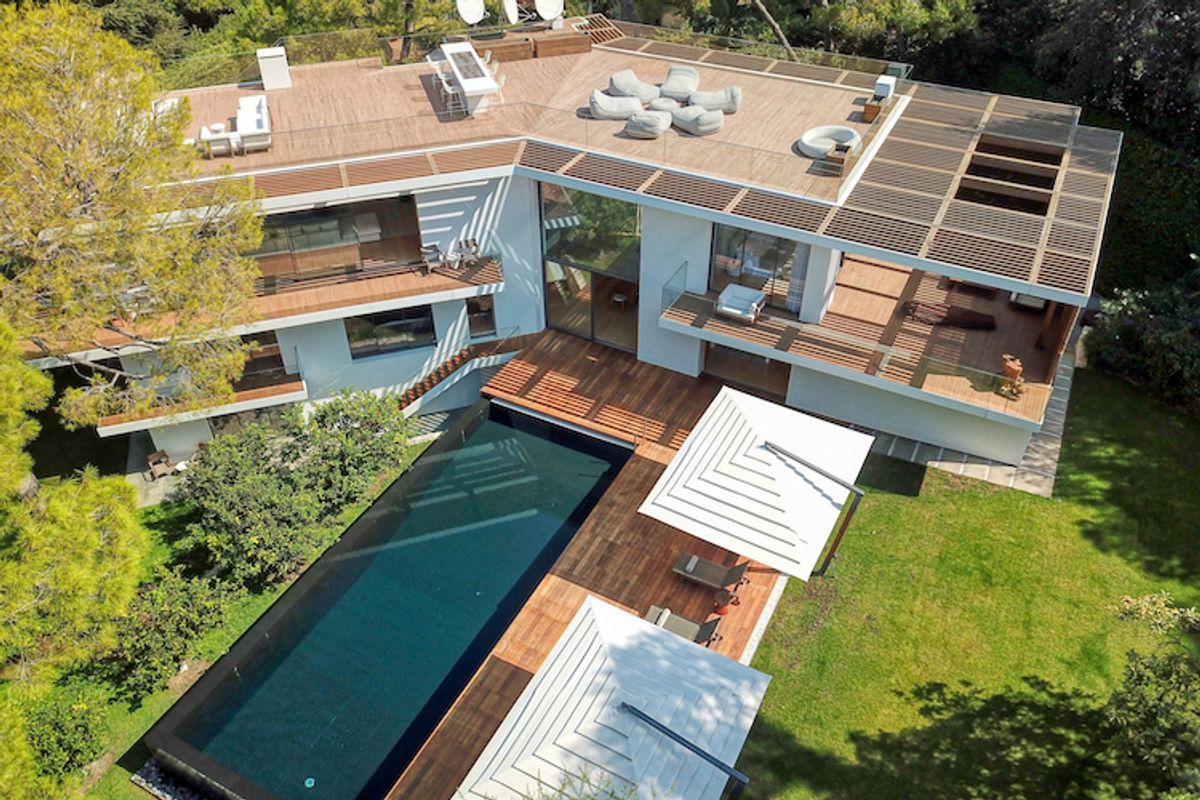
In Monaco, Foster + Partners designed the Yacht Club de Monaco, which opened in 2014 as the centrepiece of the remodelled harbour. Its deck-like terraces step up along the harbour, with views out to sea and over the Formula 1 Grand Prix circuit. Sail-like canopies provide shade in summer, and the building runs on renewable energy, including solar panels and sea water cooling.
Foster + Partners has also designed a private house on the southern tip of Corsica, on a south-facing site high above a rocky bay.
Philippe Starck: Villa Alpha on Cap Ferrat and the Saint-Tropez peninsula
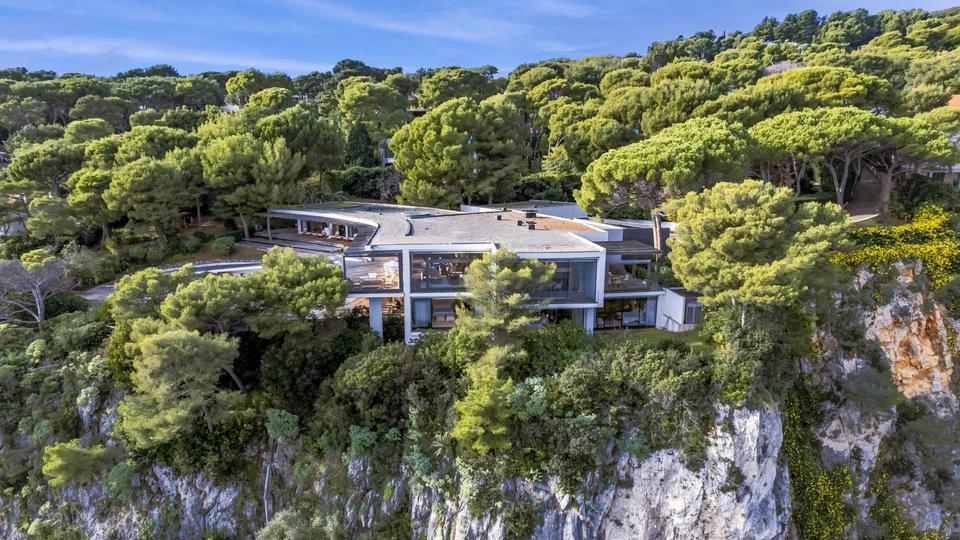
Philippe Starck is one of the best-known French designers and architects in the world. His work ranges from furniture and everyday objects to hotels, restaurants and yachts. In 1983, he was commissioned to design the private apartments of President François Mitterrand at the Élysée Palace.
On Saint-Jean-Cap-Ferrat, Starck redesigned Villa Alpha, set among pine trees above the Baie des Fosses, with views towards Monaco and Italy. Built in the 1960s and 1970s for the American film director Otto Preminger, it was one of the first Californian-style houses on the Côte d'Azur, with a distinctive semi-circular façade. In 2009, Starck renovated it entirely in glass and concrete, with around 900 m² of living space, bespoke furniture and an oval swimming pool overlooking the Mediterranean.
On the Saint-Tropez peninsula, Starck has also designed La Réserve à la Plage on Pampelonne beach, and two hotels in La Croix-Valmer: Lily of the Valley and Villa W.
An architectural heritage that shapes the Riviera today
From the 1920s villas of Barry Dierks to the contemporary homes of Les Parcs de Saint-Tropez, the French Riviera has one of the richest collections of residential architecture in Europe. Today, villas on the Riviera range from Belle Époque residences and Provençal bastides to Modernist and contemporary homes.