
La Fiorentina, Cap Ferrat
Origins
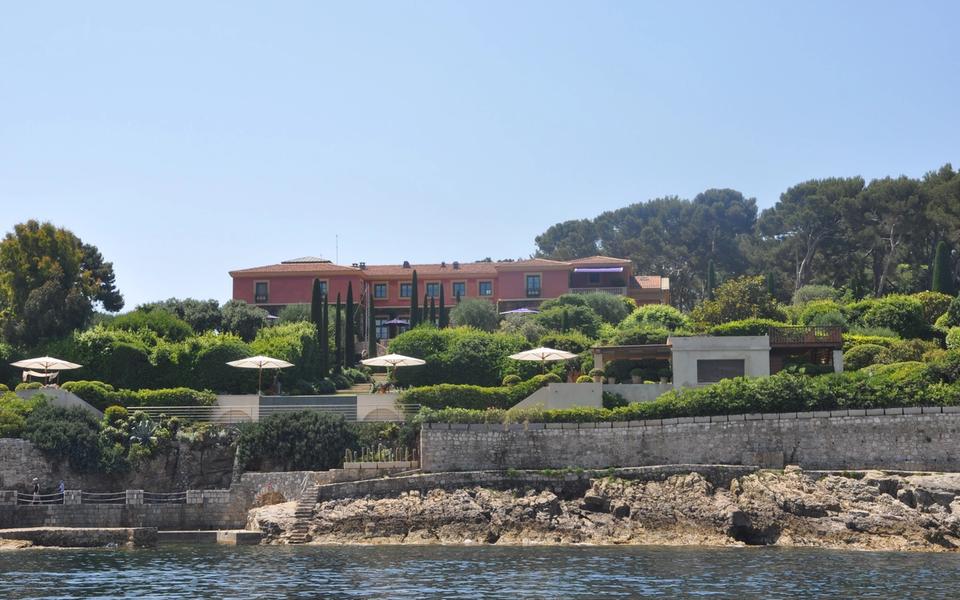
La Fiorentina was built in 1917 by Countess Thérèse de Beauchamp, daughter of Count Giorgi Vitali, on a vast piece of land at the far end of the Saint Hospice point on the Saint-Jean-Cap-Ferrat peninsula. The Countess commissioned architect brothers Aaron and Gaston Messiah to design the large rectangular building, flanked by two belvedere turrets. Working with Harold Peto, the brothers also redesigned the 22-hectare park, which had been badly damaged by strong winds, along with the staircase leading from the villa to the water's edge, the large ponds, and the orange tree groves.
The Countess grew tired of the team and dismissed them, commissioning writer, architect and landscape gardener Ferdinand Bac to complete the work. Bac, who had previously transformed Villa Croisset in Grasse into a Mediterranean-style retreat, brought a new vision to the villa and gardens, including a monumental pillar enclosure bearing the Latin inscription "Fata regunt orbem" ("Destiny rules the world"). The garden was completed by 1919.
A New Owner
The Countess soon turned her attention to the Leopolda estate in Villefranche-sur-Mer, which became her home in the early 1920s, and sold La Fiorentina to diamond magnate and art collector Sir Edmund Davis, who went on to develop much of the coastal path around Cap Ferrat. The Italian writer Gabriele d'Annunzio stayed at the villa shortly before being proclaimed Lord and Prince of Monte-Nevoso in 1939.
That same year, La Fiorentina was purchased by Lady Kenmare. Her stepson, Roderick Cameron, took charge of overhauling the villa and its grounds, enlisting architect Henri Delmotte, who had previously worked on Villa Mauresque, the home of Somerset Maugham.
The Second World War
During the renovation, Roderick and his mother lived at the neighbouring Clos de Fiorentina, an old bastide on the estate. The work was extensive: gold-flaked ceilings and sculpted stone chimneys were removed in favour of a stripped-back, modern style. The war halted the renovation, and the property's strategic position led to it being occupied by German forces, leaving it in need of further restoration once the war ended.
Post-war changes included the removal of the two belvedere turrets and the entrance's temple structure. The arcades and grand reception room made way for two new floors, giving the villa a Palladian style comparable to the Villa Rotonda in Vicenza. The grounds were redesigned by landscape gardener Russell Page.
Rory Cameron's Villa
Roderick Cameron went on to host large parties at La Fiorentina, entertaining guests including Greta Garbo, Elizabeth Taylor and Somerset Maugham, a keen bridge partner. Though the grounds have since been reduced to 30,000 sqm, Villa Fiorentina, with its two swimming pools, remains one of the largest properties on Saint-Jean-Cap-Ferrat.
The neighbouring property, Le Clos Fiorentina, is known today as the summer residence of French fashion designer Hubert de Givenchy.
This article has been written solely for the history of La Fiorentina. It is not a real estate listing.