
Hans-Georg Tersling: the Danish architect of the Belle Époque Riviera, from Cap Martin to Menton, Monte-Carlo and Nice
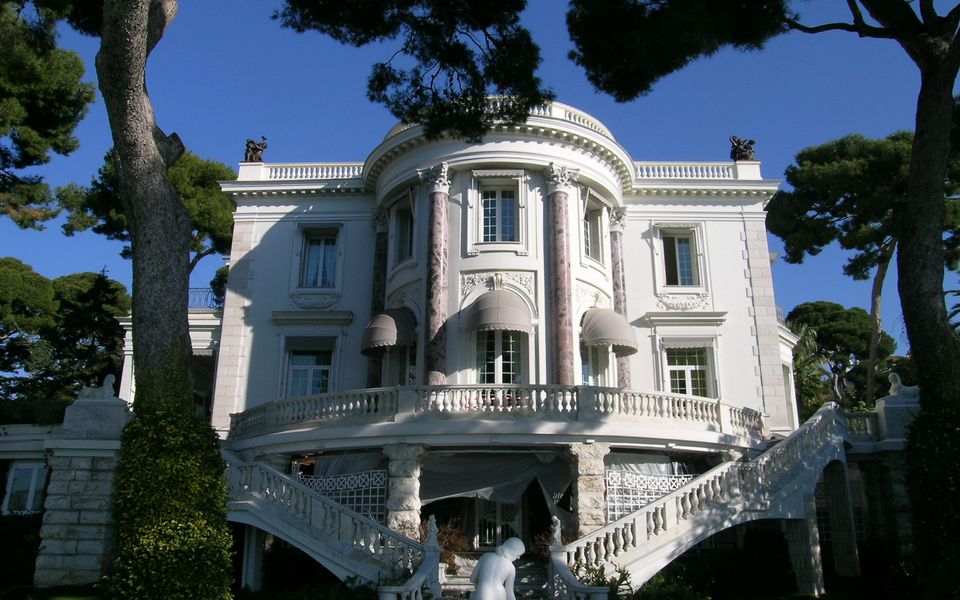
Grand hotels, imperial villas, a casino and a Russian Orthodox church: between the late 1880s and the First World War, the Danish architect Hans-Georg Tersling shaped much of the coast between Nice and Menton. Many of his buildings still stand, and several of the villas he designed on Cap Martin remain among the most remarkable residences on the Riviera.
From Denmark to the Riviera
Hans-Georg Tersling was born on 7 December 1857 on a farm near Karlebo, north of Copenhagen. His father died when he was three. He first trained as a carpenter, then studied architecture at the Royal Danish Academy of Fine Arts, graduating in 1879.
After his studies he went to France, where he worked under Charles Garnier, the architect of the Paris Opera, on the Monte-Carlo Casino. He then spent time in Paris before settling in Menton in 1887. He lived and worked there for the rest of his life.
His style
Tersling worked mainly in the neoclassical Louis XVI style, sometimes drawing on the Italian Renaissance. His buildings are known for their symmetry, columns, terraces and close relationship with the sea and gardens around them.
The Grand Hôtel du Cap Martin
Tersling’s first major commission on Cap Martin was the Grand Hôtel du Cap Martin, built for a consortium led by a Mr White and completed in 1890. The hotel was an immediate success. Emperor Franz Joseph I of Austria stayed there four times between 1896 and 1897, and Empress Elisabeth of Austria, known as Sissi, was also a guest. The building is now a private residential domain.
Many of the hotel’s distinguished guests went on to commission Tersling to design their own villas on the peninsula.
Villa Cyrnos and the imperial clients
In 1892, Tersling completed Villa Cyrnos on Cap Martin for Eugénie de Montijo, widow of Napoleon III and the last Empress of the French. Empress Elisabeth of Austria became a regular guest, and Queen Victoria, a friend of Eugénie, visited every year.
Villa Cyrnos impressed the Empress of Russia, who commissioned Tersling to build the Russian Orthodox church in Menton for the large Russian community living on the coast.
The villas of Cap Martin
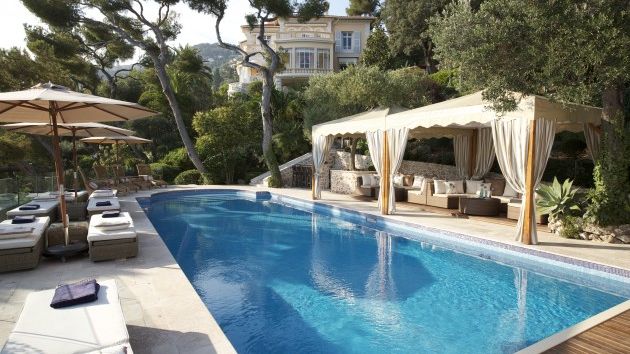
Between around 1890 and 1911, Tersling designed a remarkable number of villas in Roquebrune-Cap-Martin. Among them:
- Villa Aréthuse (1893), built for the diplomat Georges de Montgomery, and known today as Villa Trianon
- Villa Cynthia and Villa Saint-Tryphon, from the early 1890s
- Villa Serena, Villa Zamir, Villa Hirondelle and Villa Spéranza, from around 1898
- Villa Egerton, Villa Roquebrune and Villa L’Éclaircie, from the early 1900s
- Casa del Mare (around 1905), above the Baie de Roquebrune
- Villa Del Mare (around 1906), the later Villa Maria Irina, a separate property often confused with Casa del Mare
- Villa Les Rochers, built for a Mr Blake, dated 1908 in one source and around 1906 in another
- La Dragonnière and La Swalettina, from around 1911
Monaco, Nice, Beaulieu and Cap-d’Ail
Tersling’s work extended well beyond Cap Martin. His other projects include:
- The Hôtel Métropole in Monte-Carlo (1888)
- The Château Malet in Cap-d’Ail, completed in 1896 for the British diplomat Sir Edward Malet
- The Hôtel Bristol in Beaulieu-sur-Mer (1898), now converted into apartments
- Villa Masséna in Nice (1899), built for Victor Masséna and now the Musée Masséna
- Villa La Loggia in Villefranche-sur-Mer (1900)
- Villa Lairolle in Nice (1904)
Menton and Paris
Tersling left a strong mark on Menton, his adopted town. He designed the Palais Viale (1906), the municipal casino, completed in 1909 and now the Palais de l’Europe art gallery, and the Hôtel Impérial (1913), and contributed to the church of the Sacré-Cœur (1911).
In 1905, he won a competition for the Paris mansion of Olympe Hériot. In 1910, he was made a Knight of the Order of the Dannebrog, one of Denmark’s highest honours.
The end of a career
The First World War brought Tersling’s career to a sudden end. Many of his wealthy clients disappeared, leaving him with large unpaid commissions. He died in Menton in November 1920, almost without means.
Tersling’s legacy
More than a century later, Tersling’s buildings still define much of the Belle Époque Riviera, from the hotels and palaces of Menton to the villas of Cap Martin. Several of his residences remain private homes, while others, such as Villa Masséna in Nice and the Palais de l’Europe in Menton, are open to the public.
The reference work on his life and buildings is Michel Steve’s Hans-Georg Tersling, architecte de la Côte d’Azur, published in 1990.
Discover our luxury villas in Roquebrune-Cap-Martin