
Châteaux of the French Riviera: historic castles in Saint-Tropez, Cannes, Cap d'Antibes, Nice, Èze and Saint-Jean-Cap-Ferrat

True châteaux are rare on the French Riviera. Most of the coast's great residences are villas, but a few châteaux have survived, many of them built during the Belle Époque and the 1920s by wealthy families from across Europe. Some have been carefully restored and are now private homes or available for rent, while others have become luxury hotels.
Here is a selection of the best-known châteaux on the Côte d'Azur, from Saint-Tropez to Èze.
Saint-Tropez: Château Saint-Tropez
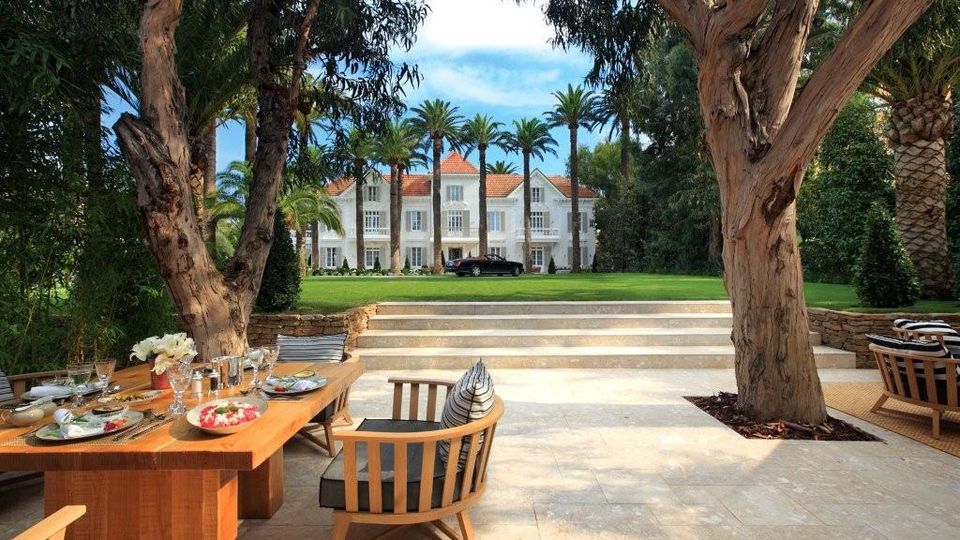
The Château Saint-Tropez is one of the few châteaux in the village of Saint-Tropez and its surroundings. It has been renovated with great taste and elegance, and enjoys a remarkable position in the centre of the village. Today it is a private residence, used by its owners for their own stays and private receptions, and it is not open to the public.
Cannes: a 15-bedroom château near Cannes
Close to Cannes, this 15-bedroom château (ref. FJ1) offers beautiful surroundings and elegant interiors. It is available to rent for business conferences and weddings, and was also used as a judges' house in the X Factor.

Cannes: Château de la Croix des Gardes
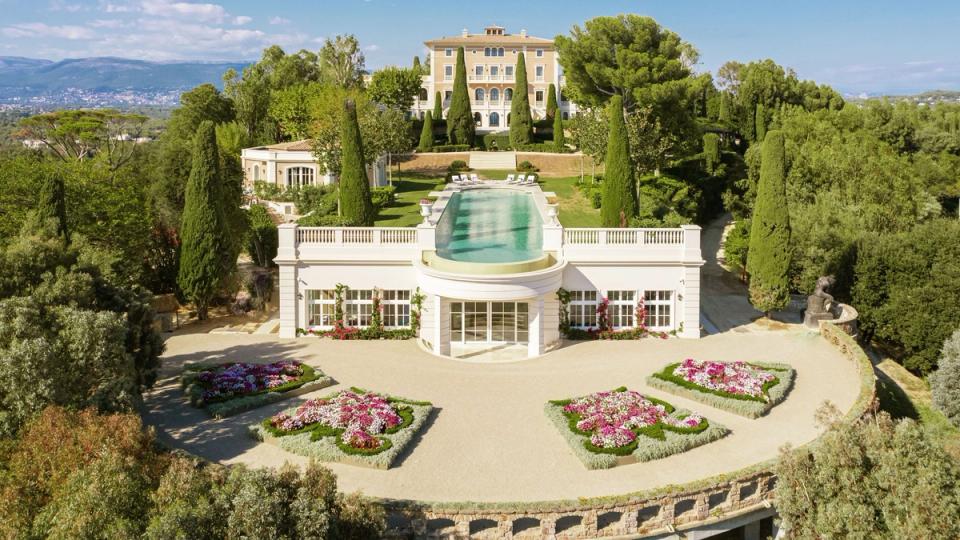
The Château de la Croix des Gardes stands on the hill of La Croix des Gardes, above the centre of Cannes, with views over the Lérins Islands and the Mediterranean. It was built from 1919 for the Swiss industrialist Paul Girod, in a Florentine style, in the district once known as the Quartier des Anglais.
The château is best known for its role in Alfred Hitchcock's 1955 film To Catch a Thief, starring Cary Grant and Grace Kelly, where it appears as the Sandford villa. It was also reportedly used by the director Alain Resnais for Last Year at Marienbad in 1961. Today, it hosts private events and exclusive stays.
Montauroux, near Cannes: Château de la Colle Noire
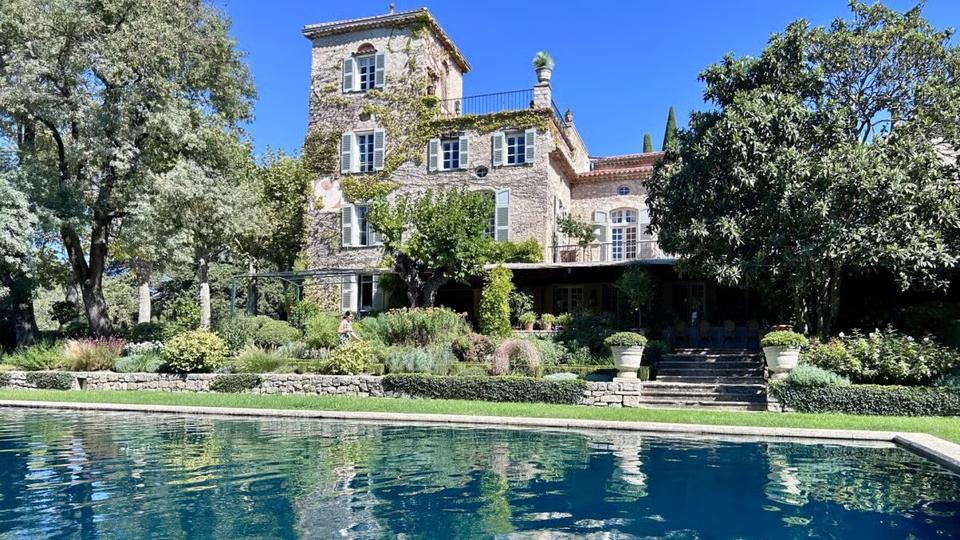
The Château de la Colle Noire, in Montauroux, around one hour north-west of Cannes, was Christian Dior's beloved home in the South of France. He bought the estate in 1950, had it redesigned by the architect André Svetchine, and spoke of it as his real home, the place he hoped to retire to. He died in 1957. After passing through several owners, the château was acquired in 2013 by Parfums Christian Dior, part of the LVMH group. Following an extensive restoration, it reopened in May 2016. Today, the château is Dior's heritage house in Provence, where the brand receives guests and partners and holds private events. Roses and jasmine are grown in its gardens for Dior's perfumes, including the fragrance named La Colle Noire, and the estate opens to the public only on rare occasions.
Cap d'Antibes: Château de la Garoupe
In 1907, Sir Charles McLaren, later Lord Aberconway, bought around four acres at the very tip of the Cap d'Antibes, a wild headland that was then almost untouched. He asked the English architect Ernest George to design a house worthy of the setting. The result was the Château de la Garoupe, with a long façade lined with half-moon windows and a grand stone stairway running all the way down to the sea.
The gardens were created by his wife, Laura McLaren, Lady Aberconway, a passionate gardener. Around the house she planted formal French gardens, a pergola and rosebushes that climbed to 12 metres, alongside irises and begonias. They soon ranked among the finest gardens on the Côte d'Azur, and in 1919 the Duke of Connaught came to visit.
Between the wars, the château was part of the Riviera's golden age. Cole Porter and his wife Linda, Pablo Picasso and Ernest Hemingway all stayed at or visited the estate. The château later passed to Lord Aberconway's daughter and her husband, Sir Henry Norman, who enlarged the house and added a floor. It remained in the McLaren family for almost a century. More information about its history.
Cap d'Antibes: Château de la Croë
Set on around eight hectares running down to the water's edge at the tip of the Cap d'Antibes, the Château de la Croë is one of the most spectacular residences on the French Riviera. It was completed in 1927 for Sir William Pomeroy Burton, general manager of Associated Newspapers, and designed by the French architect and decorator Armand-Albert Rateau. Its white classical architecture recalls an English country house, transported to the Mediterranean.
The château became world famous in 1938, when the Duke and Duchess of Windsor leased it, two years after the Duke had given up the British throne as King Edward VIII. The Duchess redecorated it lavishly, and for more than a decade La Croë was one of the most glamorous addresses in Europe. The couple received royalty and political figures, among them Winston Churchill, and guests remembered the Duke dining in full Highland dress, with a piper playing for the table. The Windsors left the château in 1949.
It was later owned in turn by the Greek shipowners Aristotle Onassis and Stavros Niarchos, and has since been restored with great care. The Château de la Croë stands next to the Villa Eilenroc, on one of the most exclusive stretches of coastline on the Riviera.
Nice: Château de la Tour du Mont Boron
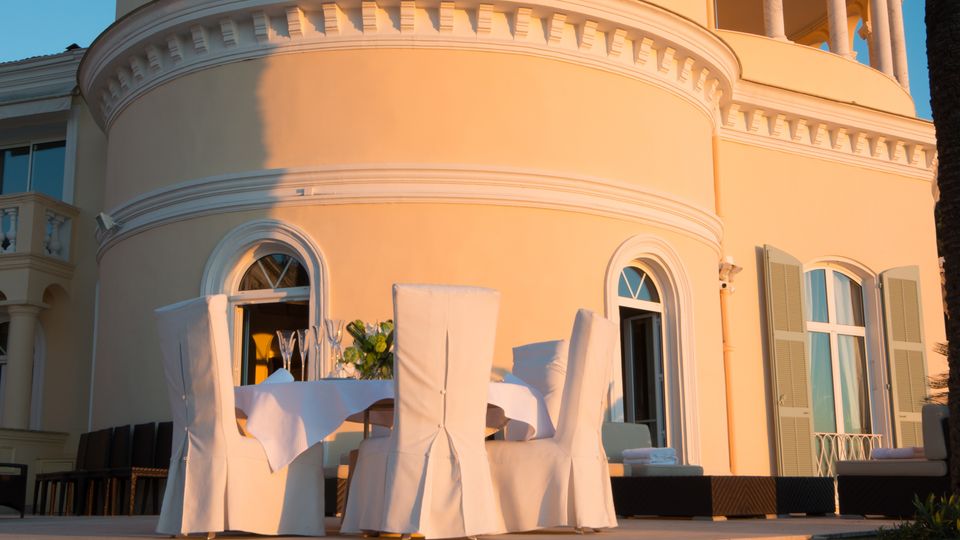
The Château de la Tour du Mont Boron is an exceptional property on the Mont Boron hill, with superb views over the port of Nice, the Castle Hill and the Baie des Anges. It has been renovated to a very high standard by a renowned Danish designer and is not available for rent.

Èze: Château Eza
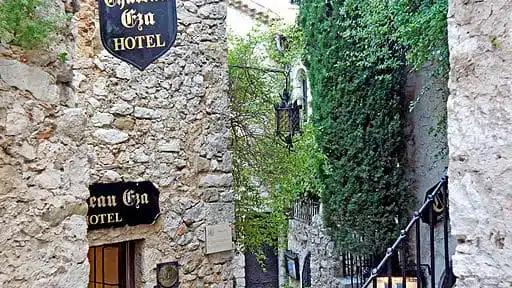
The Château Eza was built more than 400 years ago, within the walls of the medieval village of Èze, high above the Mediterranean between Nice and Monaco. In 1920, Prince William of Sweden came to Èze and made it his home, and for decades it was known as the Prince of Sweden's castle.
Since 1987, it has been a luxury boutique hotel with 14 rooms and suites, many with private terraces and views along the coast, and a Michelin-starred restaurant.
Èze: Château de la Chèvre d'Or
Very close to the Château Eza, the famous Château de la Chèvre d'Or is a luxury hotel in the medieval village of Èze, with a Michelin-starred restaurant and sweeping views over the Mediterranean.
Saint-Jean-Cap-Ferrat: Château Saint-Jean
The Château Saint-Jean stands on the waterfront in the centre of Saint-Jean, at the very beginning of the Saint-Hospice peninsula. Built in 1899 in a Venetian neo-Gothic style, this beautifully restored château is privately owned and not available for rent or sale.
Further reading
- Le Figaro (in French): Découvrez l'un des plus beaux châteaux de la Riviera, on the Château de la Croix des Gardes
- Daily Mail (in English): the French Riviera castle where Grace Kelly and Cary Grant filmed To Catch a Thief
- Patricia Morrisroe: Château Dior, on the Château de la Colle Noire